
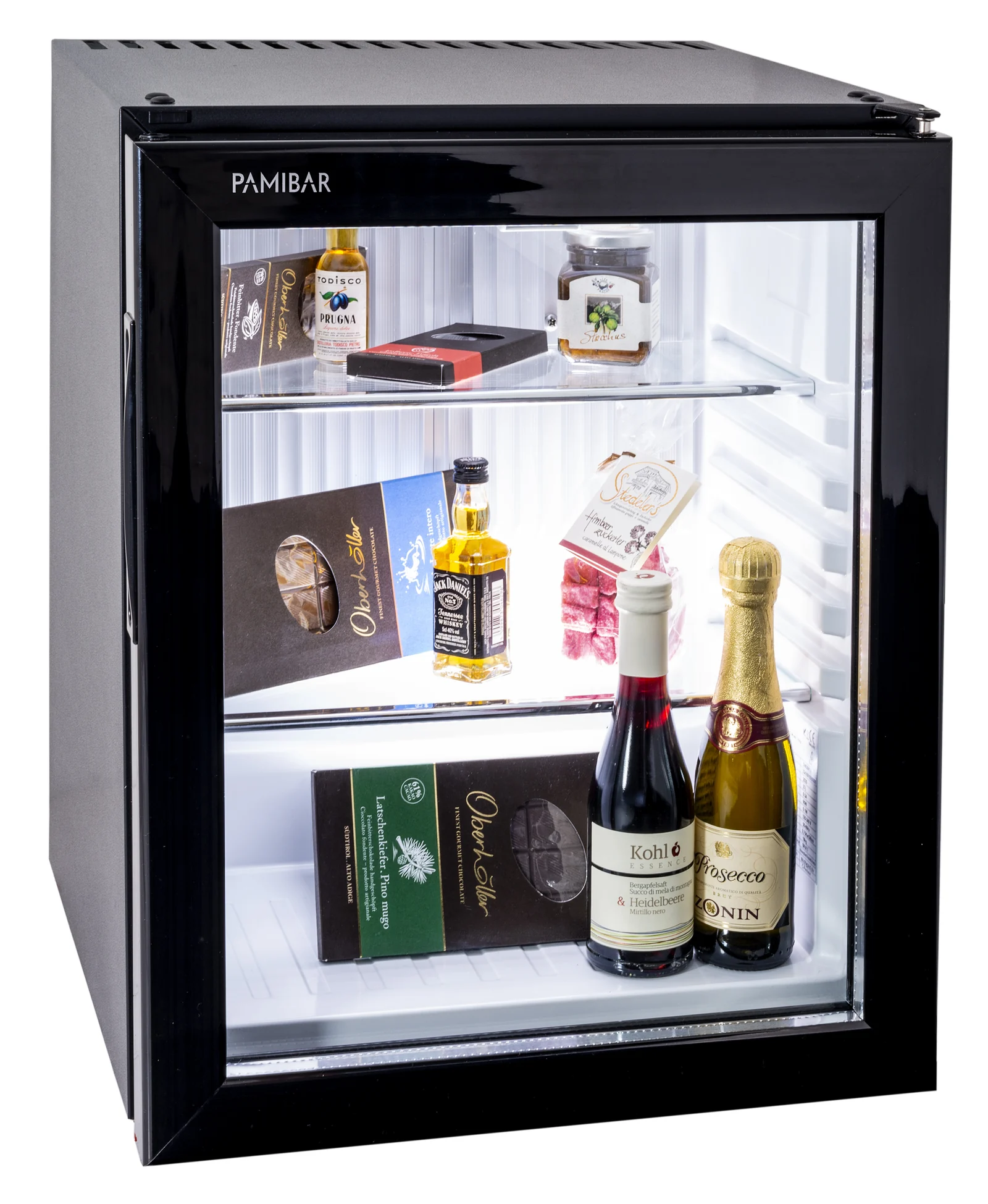
A glass door makes the contents readable before opening. It is a service and interior decision as much as a technical one.
Glass-door minibars for in-room service
Scenario
PAMIBAR offers glass doors with absorption, thermoelectric and compressor technologies.
Climate, capacity, internal light, position and required sound level determine the correct choice.
When this route fits
- The beverage selection should be visible at a glance.
- The room has a visible cabinet or dedicated niche.
- Staff need a quick visual check during room service.
Technical check
What operations and interior design should define
- 1Assortment, bottle height and shelf arrangement.
- 2Reflections, room lighting and glass position.
- 3Technology suited to climate and acoustic comfort.
- 4Cleaning and access during room turnover.
Four glass-door interpretations
Absorption, thermoelectric and compressor systems suit different contexts. Choose performance first, then capacity and presentation.
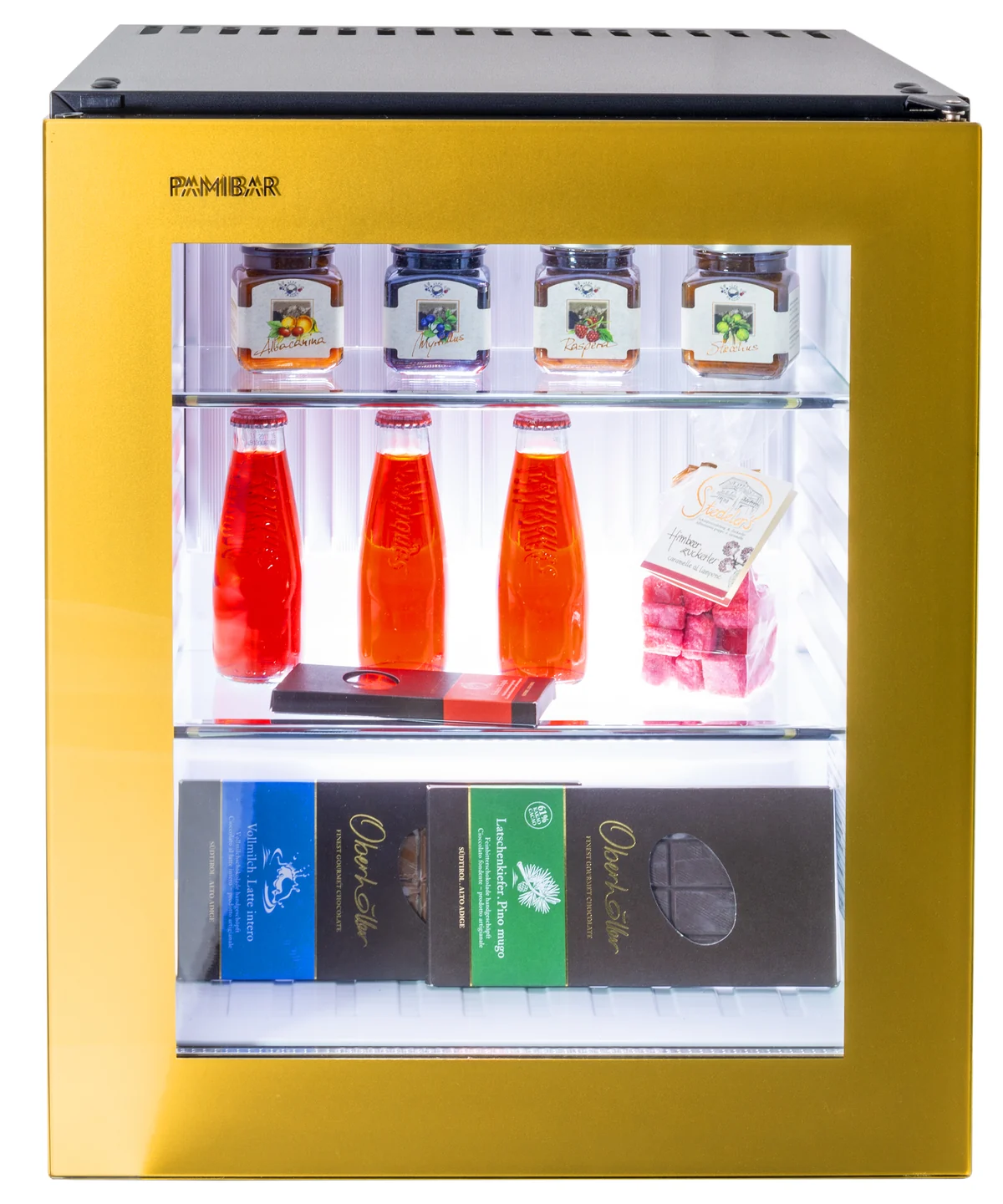
Declared data
PAMIBAR SEA30/40G
- Capacity
- 30 o 40 litres
- Dimensions
- 500 × 405 × 430 mm / 560 × 405 × 455 mm
Declared data
PAMIBAR SG30T
- Capacity
- 30 litres
- Dimensions
- 500 × 405 × 415 mm
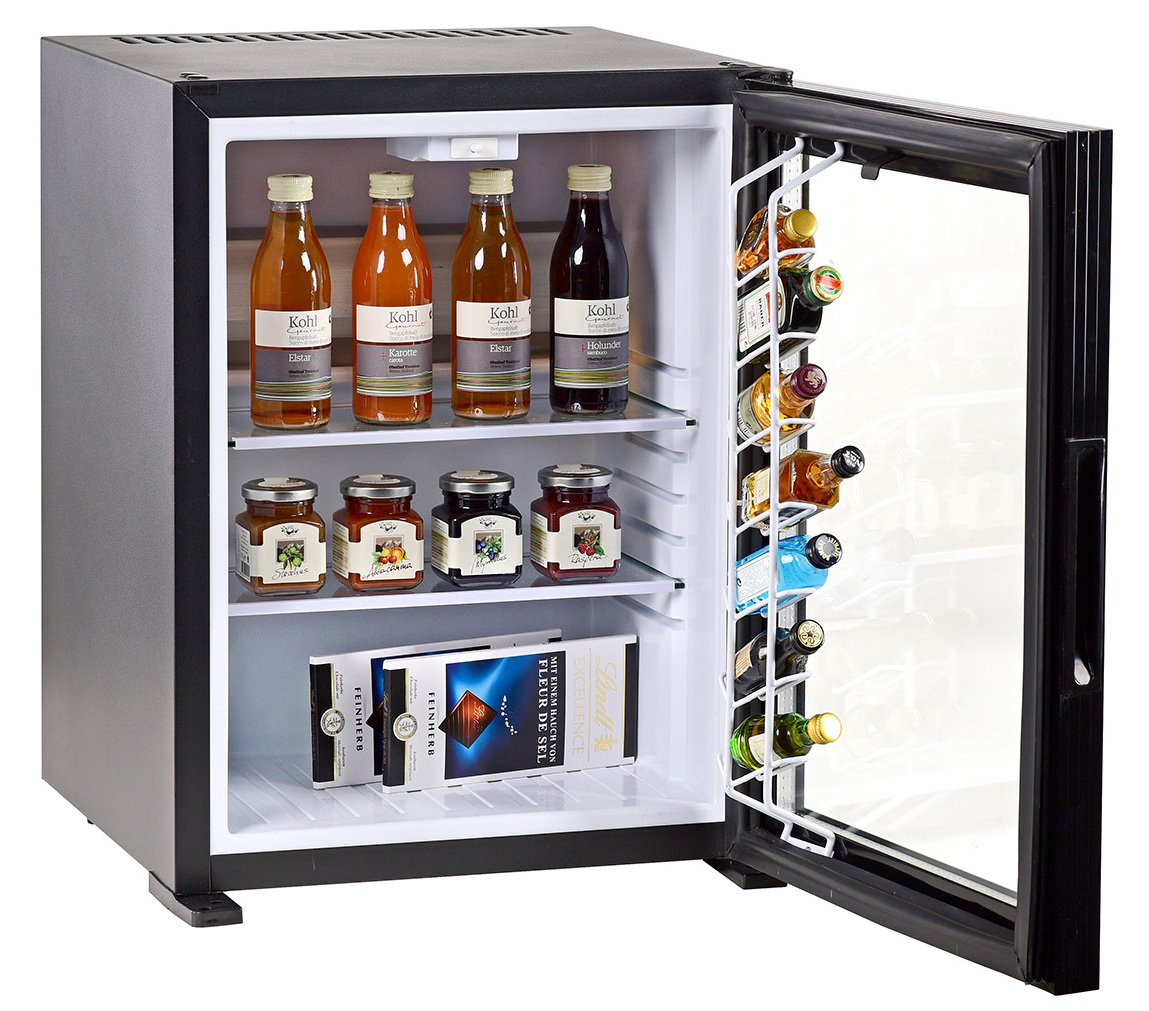
Declared data
PAMIBAR SG40T
- Capacity
- 40 litres
- Dimensions
- 560 × 405 × 435 mm
Declared data
PAMIBAR SGC40
- Capacity
- 40 litres
- Dimensions
- 552 × 403 × 458 mm
Questions from the brief
Does a glass door determine the technology?
No. It is a configuration across different cooling families. Cooling technology needs its own decision.
Can it be installed near the bed?
It can where the model and conditions are compatible. Always check the acoustic data for the chosen technology and actual position.
How should I prepare the assortment?
Share bottle formats, quantities and restocking frequency. This helps verify volume, shelving and access.